Ancient Building Complex in the Wudang Mountains
Introduction
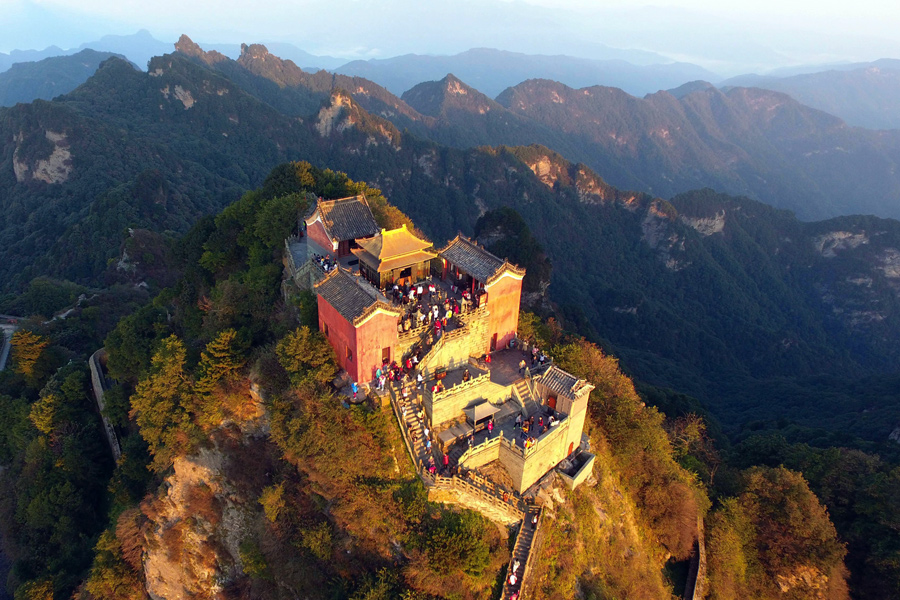
The Ancient Building Complex in the Wudang Mountains is a renowned cultural site located in the Hubei province of China, near the city of Danjiangkou under the administration of Shiyan city. This complex is a testament to the pinnacle of Chinese art and architecture, with its roots tracing back to the 7th century. Spanning nearly 1,000 years, the structures in the Wudang Mountains showcase the highest standards of Chinese architectural design and construction techniques. The complex includes a collection of Taoist palaces, temples, and various other religious buildings, providing a deep insight into the country's rich cultural and religious history.
Comprising 72 peaks, 36 cliffs, 24 gullies, three lakes, nine springs, and 10 ponds, the Wudang Mountains are not only a site of architectural and artistic significance but also a natural wonder. The main peak, Tianzhu Peak, reaches an altitude of 1,612 meters, offering breathtaking views and a rich diversity of plant life, including numerous Chinese herbs, earning the mountains the moniker of a natural drugstore.
In 1994, the ancient building complex was inscribed on the World Cultural Heritage List, highlighting its global significance and the need for its preservation. This recognition underscores the complex's importance as a symbol of China’s architectural, cultural, and religious heritage.
History
The Wudang Mountains have a storied history as a major center for Taoism, which has a history that dates back more than 2,000 years. During the Tang Dynasty (AD 618-907), the mountains began to gain prominence as a spiritual hub, with the construction of several Taoist buildings. This development continued through the Yuan, Ming, and Qing dynasties, each contributing to the architectural and cultural landscape of the area. The extensive construction during the Ming Dynasty (1368-1644), in particular, reflects the efforts of Yongle Emperor to promote Taoism and solidify his rule by endorsing the belief that imperial power is divinely sanctioned.
The buildings and structures that remain today in the Wudang Mountains include four Taoist palaces, remnants of two other palaces, two temples, and numerous cliff temples and halls of worship. These structures have been meticulously preserved, maintaining their original layout, design, style, materials, and techniques. The secluded nooks and terraces, surrounded by nunneries and halls of worship, are characteristic of the Taoist architectural style found in the Wudang Mountains.
Architecture
The architectural diversity of the Wudang Mountains is one of its defining features. The ancient building complex boasts a variety of styles and materials, including wooden temples, copper halls, and stone cliff temples. This variety exemplifies the superb techniques and artistic creativity that characterize the structures in the complex. Statues made from copper, wood, stone, and earth further highlight the delicate craftsmanship and artistic expression that are hallmarks of the site.
Emperors designed the Taoist buildings on the Wudang Mountains, with imperial officials overseeing their construction. The grandeur of the design and the meticulous attention to detail in the construction of these buildings resulted in masterpieces that are unparalleled among China's existing Taoist sites. The lavish furnishing of the buildings with statues and items of worship reflects the cultural and religious significance of the complex.
Cultural Heritage
Superb techniques
The Wudang Mountains' ancient building complex is renowned for the superb techniques employed in its construction. The diversity of styles and materials used, including wood, copper, and stone, showcases the versatility and innovation of Chinese architectural practices. The statues within the complex, crafted from copper, wood, stone, and earth, are celebrated for their intricate detail and artistic creativity, representing a pinnacle of ancient Chinese art.
Treasure house of Taoist architecture
The buildings on the Wudang Mountains represent a treasure trove of Taoist architectural brilliance. Designed by emperors and executed under the supervision of imperial officials, these structures were constructed with exceptional care and precision. The grand scale and lavish furnishing of the buildings with statues and items of worship solidify their status as masterpieces of Taoist architecture, unmatched in their historical and cultural importance.
Historical significance
The historical significance of the Wudang Mountains' ancient building complex is profound. The extensive construction carried out during the Ming Dynasty reflects Yongle Emperor's efforts to expand external contacts and promote Taoism throughout the country. By associating imperial power with divine sanction, these buildings serve as vital resources for studying the political and religious history of the period, providing insights into the beliefs and practices that shaped Chinese society.
Taoist Culture and Wudang Wushu
Taoism has been a central element of the Wudang Mountains' cultural heritage for centuries. The religious practices and rituals followed by Taoist priests today are deeply rooted in traditions passed down through generations. These rituals involve reciting ancient scriptures and playing Taoist music, maintaining a centuries-old formula that has been extensively studied by scholars and experts.
Wudang wushu, also known as Wudang martial arts, is a traditional Chinese martial art that is deeply rooted in the principles of Taoism. This martial art form is renowned for its focus on internal strength, fluid movements, and the integration of breathing techniques with physical exercise. Wudang wushu includes a variety of practices such as tai chi, xingyi (mental form), and bagua (the Eight Diagrams). Taoist priests have historically placed equal importance on religious practice and health promotion, drawing principles from Taoist theories and applying them to wushu skills. This integration of ancient Chinese philosophy with martial arts led to the development of Wudang wushu, which reached its peak during the Ming Dynasty. Today, Wudang wushu remains a major school of Chinese martial arts, celebrated for its philosophical depth and exceptional skill.
Preservation and Conservation
The preservation and conservation of the Wudang Mountains' ancient building complex are of paramount importance due to its historical, architectural, and cultural significance. As a UNESCO World Cultural Heritage site, efforts are continuously made to maintain the integrity and authenticity of the structures. These efforts involve careful restoration and maintenance of the buildings, ensuring that their original features are preserved for future generations.
Modern conservation techniques are employed to address the challenges posed by natural elements and human activity. The unique architectural design and materials used in the construction of the buildings require specialized knowledge and skills to ensure their long-term preservation. Ongoing research and collaboration with experts in the field are essential to developing effective strategies for the conservation of this invaluable cultural heritage site.
Tourism
The Wudang Mountains attract tourists from around the world, drawn by the stunning natural beauty, rich cultural heritage, and spiritual significance of the site. The complex's inclusion in the World Cultural Heritage List has further heightened interest in the area, making it a popular destination for travelers seeking to explore China's ancient cultural and religious history.
Visitors to the Wudang Mountains can explore the ancient palaces, temples, and Taoist buildings, gaining insight into the architectural and artistic achievements of the Yuan, Ming, and Qing dynasties. The mountains also offer breathtaking views and opportunities for hiking and exploration, with the main peak, Tianzhu Peak, providing a vantage point for stunning vistas.
Tourism in the Wudang Mountains is managed to ensure the preservation of the site's cultural and natural resources. Efforts are made to balance the needs of tourists with the conservation of the complex, promoting sustainable tourism practices that protect the integrity of this remarkable cultural heritage site.








